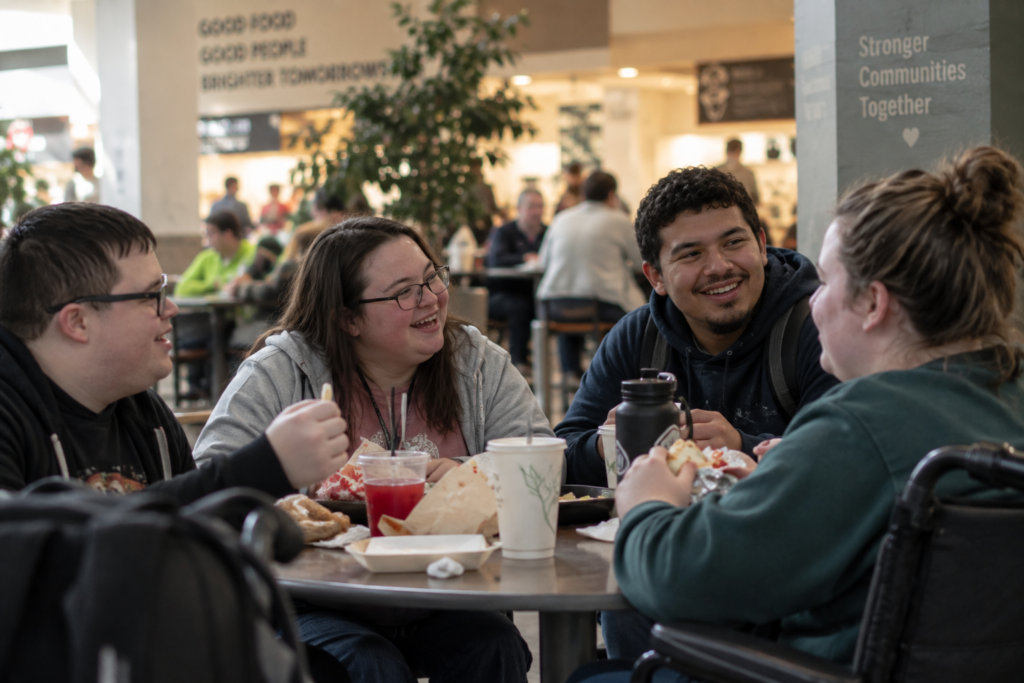
Social skills generalization can be challenging, even when students understand what they’ve learned. For example, a student might explain what personal space means during a classroom lesson, answer questions correctly, and demonstrate the skill during a role play.
Later that day, the same student stands too close to someone in the cafeteria.
Sound familiar?
For special education teachers and counselors, situations like this can be frustrating. After all, the student demonstrated that they understood the skill. Why didn’t they use it when the opportunity came?
The answer may involve social skills generalization, which means using a learned skill with different people, in different places, and in everyday situations.
Understanding this difference can help educators move beyond teaching students what to do and begin helping them use those skills more independently.
What Is Social Skills Generalization?
Social skills generalization happens when students apply something they have learned to situations beyond the original lesson.
For example, a student might learn how to start a conversation during a structured activity. Later, they use that same skill while talking with a classmate, meeting someone new, or participating in a community activity.
The setting changes, but the skill remains useful.
Social skills generalization also involves maintaining skills over time. A student who demonstrates a skill today may need continued opportunities to practice before using it consistently weeks or months later.
The IRIS Center at Vanderbilt University explains generalization as applying learned behaviors in new situations and maintaining them over time.
For educators, this highlights an important point: demonstrating a skill during instruction and using that skill independently are two different measures of learning.
Why Do Students Struggle to Use Social Skills Outside the Classroom?
Many social situations involve more information than we initially recognize.
Consider a student learning how to greet someone.
During instruction, the student may practice saying hello to a familiar teacher. The teacher knows what to expect, provides encouragement, and gives the student time to respond.
Now imagine the student encountering an unfamiliar person in a busy hallway.
The interaction may happen quickly. Background noise can make communication difficult. The student may need to recognize whether the person wants to talk, decide what to say, and respond without the usual classroom prompts.
The skill itself hasn’t necessarily changed. The circumstances surrounding it have.
Students with disabilities may also experience differences in communication, attention, sensory processing, or understanding social expectations. These factors can affect how they respond in unfamiliar situations.
Rather than assuming a student has forgotten a skill, educators can ask a more helpful question:
What changed between the lesson and the real-life situation?
That question can guide the next steps in instruction.
How Can Educators Support Social Skills Generalization?
Teaching a social skill is an important first step. Helping students use that skill in everyday life requires additional planning.
The following strategies can help educators connect classroom learning with meaningful experiences.
1. Teach Skills Using Concrete Examples
Social expectations are not always easy to explain.
Telling a student to “be respectful” or “use appropriate social skills” may not provide enough information about what they should actually do.
Instead, educators can identify the specific behavior they want to teach.
For example, when teaching personal space, students might practice recognizing when someone needs more room, asking permission before touching another person, or responding when someone requests additional space.
These examples make expectations easier to understand.
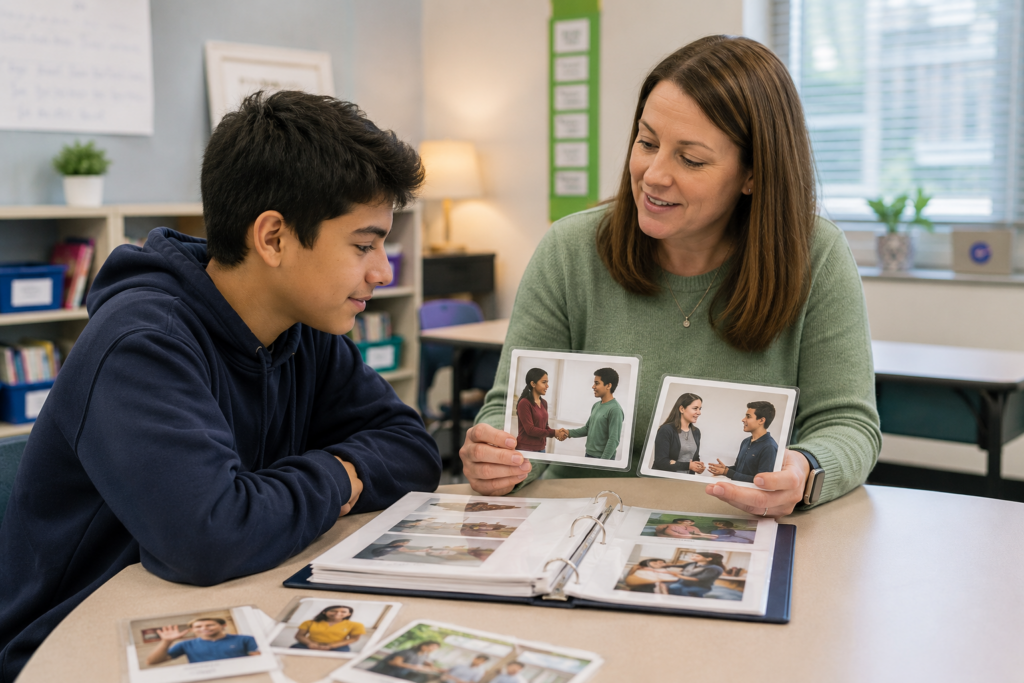
Visual supports, demonstrations, and videos can also help students recognize what a skill looks like in different situations.
The Healthy Relationships Curriculum includes instructional videos, visual supports, role plays, and scenario activities that help educators introduce and reinforce important social and relationship skills.
2. Practice the Same Skill in Different Situations
Students often benefit from seeing how one skill applies across several settings.
Consider a lesson about handling rejection.
A student may practice responding appropriately when a teacher says no to a request. However, rejection can also occur when a friend declines an invitation, someone doesn’t want to share an item, or a peer chooses a different activity.
Each situation involves a similar concept, but the experience may feel different.
Educators can use role plays and scenarios to introduce these differences gradually.
Students might first practice with familiar adults before working with peers or exploring less predictable situations.
The goal isn’t to memorize one response. It’s to help students recognize when a skill applies and identify appropriate ways to respond.
3. Use Video Modeling and Repeated Practice
Watching a social interaction can help students understand what they are learning.
A video allows educators to pause, replay, and discuss situations that might happen too quickly during an actual interaction.
For example, students can watch a conversation and identify how someone starts talking, takes turns, recognizes another person’s response, or ends the interaction.
Then they can practice those skills.
Some learners may benefit from repeating the same activity several times. Others may need different examples or additional visual prompts.
Healthy Relationships uses video demonstrations, scripted role plays, and guided activities to help students observe social situations and practice important skills.
Educators interested in seeing this approach can watch sample Healthy Relationships videos.
The videos are a starting point. Guided practice and opportunities to use the skill help connect what students watch with what they do.
4. Look for Opportunities Beyond the Lesson
Social skills instruction doesn’t have to end when the classroom activity is over.
Everyday routines offer opportunities to practice skills students have already learned.
A student working on conversation skills might practice greeting someone during a school activity. Another student learning about personal space might use that skill while waiting in line.
Students working on friendship skills may have opportunities to practice during clubs, group activities, or community outings.
These moments don’t always require a separate lesson.
Sometimes, educators simply need to recognize the connection between what they have taught and what students are experiencing.
Of course, students may still need reminders or support. That doesn’t mean the practice isn’t valuable.
The goal is to create opportunities for students to use their skills in meaningful situations, not to expect immediate independence.
5. Include Families and Other Support Professionals
Students encounter social situations in many places.
A student may demonstrate a skill at school but need additional support using it at home, during community activities, or with unfamiliar people.
Communication between educators, families, counselors, and other support professionals can help identify those differences.
For example, a caregiver might share that a student has difficulty recognizing when someone wants to end a conversation. A teacher may notice the same challenge during group activities.
Together, they can identify consistent language, examples, or supports that may help.
This doesn’t mean families need to recreate classroom lessons at home.
Instead, educators can share practical ideas that connect instruction with situations students already encounter.
Healthy Relationships includes family resources and home supplements that can help reinforce skills across different environments.
How Do You Know if Social Skills Generalization Is Happening?
Progress monitoring should look beyond whether a student can answer questions about a skill.
Educators also need to consider how students use what they’ve learned.
For example, a student working on personal space might demonstrate the skill during a classroom role play but still need reminders in the hallway.
Over time, that student may begin recognizing when to adjust their distance with fewer prompts.
That’s meaningful progress.
When monitoring social skills generalization, educators can consider several questions:
- Can the student demonstrate the skill during a structured lesson?
- Does the student use the skill with different people?
- Can the student apply it in more than one setting?
- How much prompting or support does the student need?
- Does the student continue using the skill over time?
These observations can help educators identify strengths and determine where additional instruction may be beneficial.
It’s also important to recognize that progress doesn’t always follow a straight line.
A student might demonstrate independence in a familiar setting but need more support in a new environment. That information can help educators plan additional practice rather than treating the situation as a failure.
For educators looking for ways to document this growth, Healthy Relationships includes progress monitoring resources that support skill assessment, instruction, and ongoing evaluation.
Why Individualized Instruction Still Matters
No single teaching strategy works for every student.
Some learners benefit from visual supports and repeated demonstrations. Others may need additional processing time, communication supports, or opportunities to practice with familiar people.
Age, interests, experiences, and individual goals also matter.
A high school student learning conversation skills may need different examples than a younger student. Someone preparing for employment might benefit from practicing workplace interactions, while another learner may focus on friendships or community participation.
Instruction should reflect those differences.
Social skills generalization is not about expecting every student to respond in exactly the same way.
It’s about helping individuals develop skills they can use to communicate, make choices, maintain boundaries, build relationships, and participate more fully in everyday life.
Helping Students Move From Knowing to Doing
One of the most rewarding parts of teaching social skills is seeing students begin to use what they’ve learned.
Sometimes that progress happens during a structured activity. Other times, it appears unexpectedly during a conversation, community outing, or interaction with a peer.
Those moments remind us why practice matters.
Students may understand a concept long before they can use it consistently. By providing clear instruction, varied examples, repeated practice, and opportunities across settings, educators can help close the gap between knowing a skill and using it.
Healthy Relationships, developed by educators and counselors at Wesley Schools, provides lessons, videos, visuals, role plays, and progress monitoring tools designed to support this kind of instruction.
If you’re looking for practical ways to teach and reinforce social and relationship skills, explore what’s included in Healthy Relationships or watch our program overview.
You can also start a free trial of Healthy Relationships to explore the teaching materials and see how they might fit into your classroom, counseling program, or organization.
Because the real measure of learning isn’t always what students can tell us during a lesson.
It’s what those skills help them do in everyday life.
Author: Annie Smith, M. Ed. — Behavioral Health Specialist