Navigating social interactions often involves understanding how physical proximity affects comfort, communication, and safety. For many learners, understanding personal space is not an automatic skill.
Educators and support professionals may notice a student standing very close during conversations, moving too near peers in line, or struggling to recognize when someone appears uncomfortable. These moments can create challenges, yet they also provide useful starting points for instruction.
The goal is not to teach every learner to follow one rigid distance rule. Instead, educators can help students understand boundaries, recognize context, and develop skills that support more comfortable interactions across different environments.
Defining Personal Space in Concrete Terms
Personal space can feel like an abstract concept, especially when expectations are communicated through vague reminders such as “stand back” or “give them some room.”
Learners may benefit from more concrete explanations. Educators can describe personal space as the physical distance that helps people feel comfortable and safe during an interaction.
Structured teaching can make these expectations easier to learn. A recent meta-analysis of social skills training found that explicit, structured instruction can meaningfully improve social responsiveness for autistic individuals and others who benefit from this kind of support. Personal space is a good example, since it is often assumed rather than taught, yet it becomes far clearer when addressed directly.
A student may understand that they should not touch another person without permission while still needing support to recognize appropriate physical distance during a conversation. Direct instruction can help separate those related concepts and give learners clearer information about what is expected.
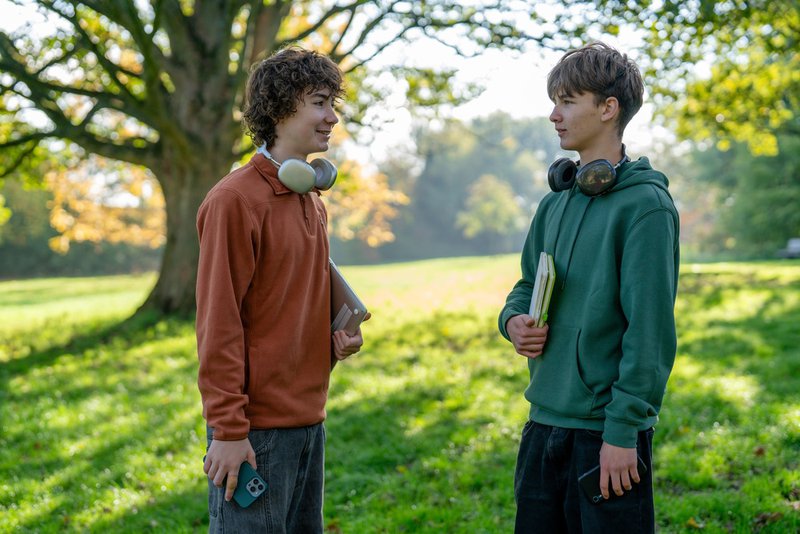
Turning an Invisible Concept Into Something Students Can See
Personal boundaries are difficult to understand when learners cannot see them.
Visual and physical supports can provide a concrete reference point while students practice. Floor markers, hula hoops, seating spots, hand-length measurements, or visual illustrations of a “personal bubble” can help make appropriate distance easier to recognize.
For example, an educator might use floor tape during a group activity to show where students can stand while waiting for a turn. Over time, some learners may need fewer visual prompts as they become more comfortable judging distance independently.
The support is there to teach the skill, not to become the skill.
Personal Space Can Change With the Situation
One common challenge is teaching personal space as though one measurement applies everywhere.
It does not.
The distance a learner maintains while speaking with a teacher may differ from the distance needed while standing in a crowded cafeteria line. Sitting beside a close family member can also feel different from speaking with an unfamiliar person in the community.
Students can benefit from discussing why those differences exist. Who is involved? Where are they? What is happening? Does the other person appear comfortable?
These questions can help learners move beyond memorizing a single rule and begin considering context.
Modeling Boundaries Before Asking Students to Practice
Many social expectations are easier to understand when learners can see them in action.
Educators can demonstrate two versions of the same interaction, such as standing very close to a conversation partner and then standing at a more comfortable distance. Students can discuss what they notice and identify differences between the examples.
A learner may understand a verbal explanation but still benefit from watching the behavior. Another learner may recognize appropriate spacing during instruction yet need practice using the skill independently.
Those starting points matter.
Video modeling and role-play are also approaches educators can use when teaching social skills. Research on video modeling and role-play describes how visual demonstrations and structured practice can help learners observe and rehearse social behaviors (McCoy et al., 2016). Healthy Relationships includes instructional videos, lessons, visual supports, and other teaching tools that professionals can use to introduce concepts and situations before or alongside practice. See what’s included in Healthy Relationships to explore the resources available for instruction.
Putting Boundary Skills Into Everyday Interactions
Watching a demonstration is different from using the skill.
Role-play can give learners opportunities to practice situations they may encounter throughout the school day. An educator might invite students to practice joining a small group conversation, walking past peers in a hallway, waiting in line, or speaking with an unfamiliar adult.
Feedback can remain specific and respectful.
Instead of saying, “You are too close,” an educator might point out what the learner did well before offering a concrete adjustment. For example: “You faced your classmate and waited for them to finish speaking. Try taking one step back and see how that feels.”
Small adjustments can become meaningful learning opportunities.
Connecting Instruction With Individual Goals
Progress does not look the same for every learner.
One student may be working toward recognizing when another person moves away during a conversation. Another may be learning to maintain appropriate spacing in familiar classroom routines. A third learner may already understand the concept and need opportunities to apply it in less familiar environments.
Individual goals can help educators identify what skill the learner is developing and what support remains helpful.
Does the student need a visual reminder? More opportunities to observe others? Practice with peers? Support recognizing nonverbal cues?
The answers may differ from one learner to another.
Personal Space Beyond the Classroom
A student who demonstrates appropriate personal space during a structured lesson may not automatically use the same skill at lunch or during a community outing.
The same thing can happen at home.
A caregiver may observe different results during family gatherings, shopping trips, or conversations with visitors. Those differences do not necessarily mean the learner has failed to understand the skill. They may show that the learner needs additional opportunities to practice in a new context.
Educators can create those opportunities during hallway transitions, cafeteria lines, recess, vocational activities, community outings, and other everyday routines.
Practice helps connect instruction with real life.
Recognizing Progress and Remaining Support Needs
Repeated practice can help professionals understand how a learner is progressing.
A student who once needed a verbal reminder before every interaction may begin responding to a visual cue. Later, that learner may maintain appropriate distance in familiar situations without either prompt.
That change is meaningful.
Educators can also identify where challenges remain. Perhaps the learner uses the skill successfully with familiar peers but struggles in crowded spaces. Maybe they understand physical distance yet need more support recognizing signs that another person feels uncomfortable.
Those observations can help shape future instruction.
Adapting Personal Space Instruction to Individual Needs
Sensory needs, communication styles, mobility, previous experiences, and individual goals can all influence how a learner experiences physical proximity.
For example, a student may move closer to others because hearing spoken information is difficult. Another may avoid certain spaces because unexpected physical contact feels overwhelming. Adapted instruction can help educators address the underlying need rather than assuming every behavior has the same explanation.
That distinction matters.
Teaching personal boundaries should remain respectful and person-centered. Educators can also explore how to teach personal space without creating fear when introducing these concepts to learners.
The goal is to help learners understand social expectations while recognizing their own comfort, safety, and communication needs.
For questions about implementation, training, licensing, or the curriculum itself, educators can also visit the Healthy Relationships FAQ page for answers to common questions.
Bringing Boundary Skills Into Everyday Learning
Teaching personal space is about more than asking students to stand farther apart. It involves helping learners understand their own boundaries, recognize the comfort of others, and adjust their behavior across different situations.
What does the learner already understand? Where do they need more practice? Which supports help them participate with greater confidence?
Those questions can guide meaningful instruction.
The Healthy Relationships curriculum developed by Wesley Schools provides lessons, visual supports, instructional videos, and teaching tools that can help professionals address physical boundaries alongside communication, consent, relationships, and personal safety.
Educators who want to see the instructional approach in practice can also request a free Healthy Relationships Sample Packet before exploring the full curriculum.
For educators and support professionals, opportunities to teach personal space can arise throughout ordinary routines. You can start a free trial of Healthy Relationships to explore the instructional materials and video library firsthand.
If you are working through a specific classroom or school challenge, you can also schedule a free meeting with the Healthy Relationships team to discuss your needs.
Author: Jen Falkowski, M.Ed. — Special Education Supervisor
Leave a Reply